An indoor room and an open-air terrace can create very different proposal photographs. Neither is automatically more romantic. For a proposal in Dallas or elsewhere in DFW, start with how you want the moment to feel: quiet and enclosed, surrounded by greenery, or open to a city view.
Then compare the practical details behind that feeling. Privacy, light, access and a workable fallback matter as much as the backdrop. The photographs below are examples from past photographic work, offered as visual inspiration. They are not a list of bookable Dallas venues, and they do not imply that we planned or styled every setting shown.
Choose the feeling before the location
Think about your partner's comfort with attention. Would they enjoy a broad outdoor view, or feel more at ease in a space with fewer people nearby? A dramatic photograph is only one part of the experience; the setting should leave room for a response that feels natural.
Write down three priorities before collecting venue ideas. For example: a quiet moment, natural light and somewhere nearby to celebrate afterward. If two settings both look beautiful, those priorities give you a useful way to choose.
What an indoor proposal setting can offer
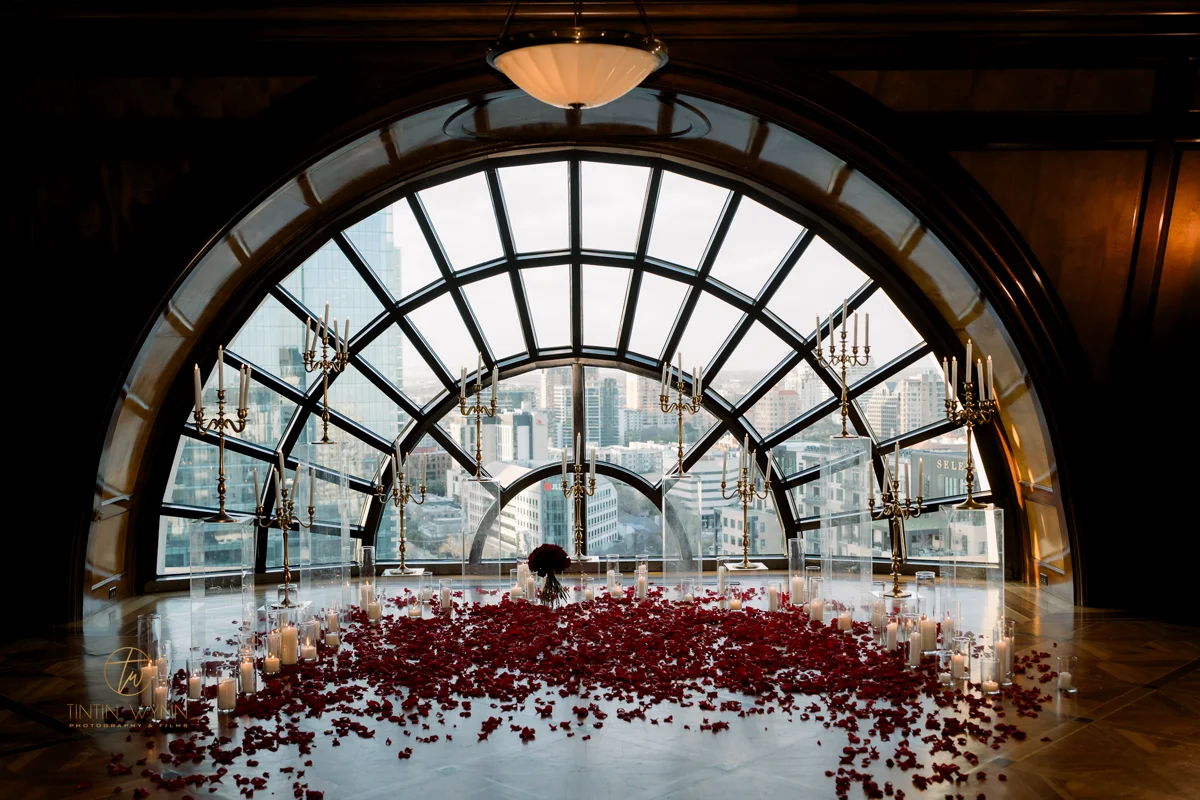
An indoor space can create a defined background and a more contained atmosphere. A large window may become the visual focus, while warm interior light can make the room feel intimate. Indoor does not automatically mean private, however: ask who can enter the space and whether it is reserved exclusively for your time.
The arched-window photograph shows how architecture can frame a setting. Red petals and candles draw attention toward the center, while the view through the window adds depth. These are visible details in this photograph, not a promise that the same design or location is available.
Before choosing an indoor space, ask:
- How does the room look at the proposed time of day, including its window and artificial light?
- Is there enough clear space for the moment and for the photographer's position?
- What setup, photography and decoration permissions are required?
- What are the access, cleanup and reservation arrangements?
If you prefer a darker, warmer look, compare the Candlelit room gallery. Candle policies vary by location; confirm what is permitted rather than assuming that an inspiration photograph establishes the rules.
What an outdoor proposal setting can offer
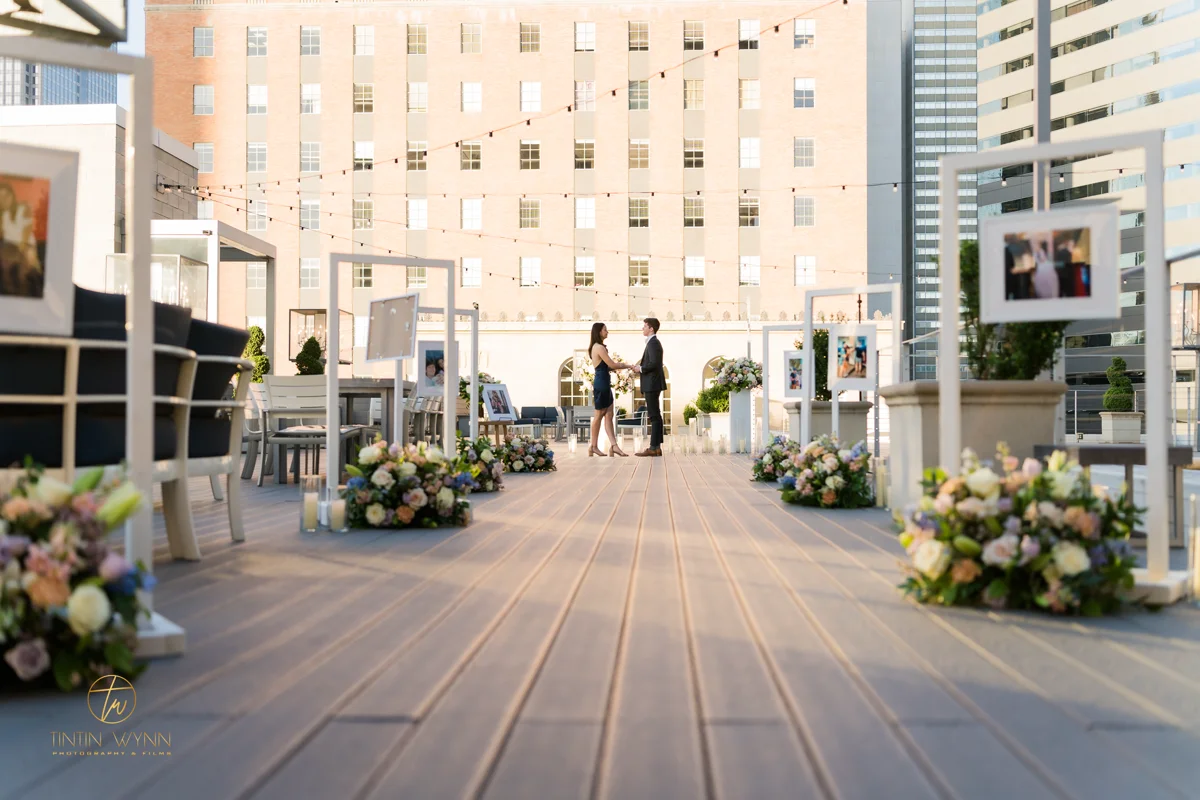
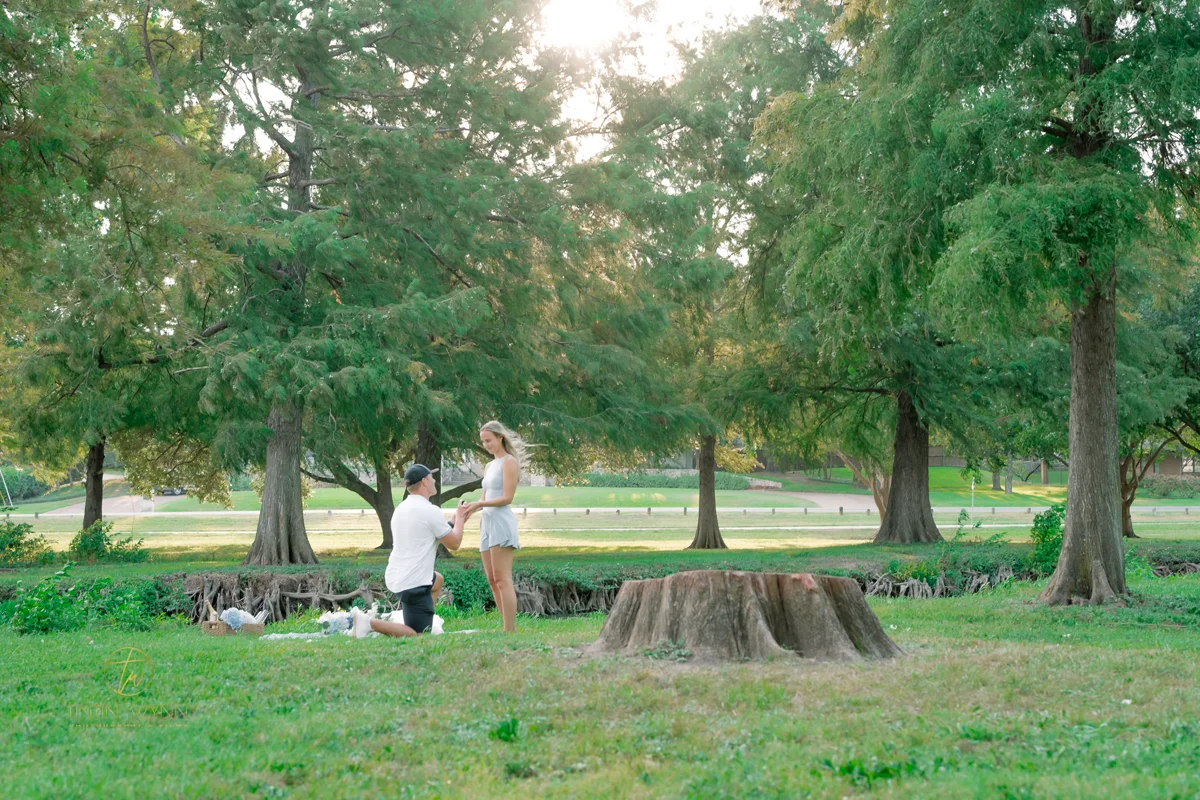
Outdoor settings can give photographs a sense of space. A terrace creates strong lines and a wider view; a garden or wooded area brings leaves, grass and softer surroundings into the frame. The background can be part of the experience without needing an elaborate design.
In the garden photograph below, the couple remain the focus within a clearing framed by trees. Compare that with the open terrace above: one surrounds the moment with greenery, while the other draws the eye along a clear architectural path.
Before choosing an outdoor space, ask:
- How busy is it likely to be at the intended time, and can privacy actually be arranged?
- Where will the light fall, and is the background suitable from the photographer's angle?
- Are access, photography permission or a reservation needed?
- What happens if rain, wind or uncomfortable temperatures change the plan?
For more visual comparisons, explore the Woodland roses and Lakeside moment galleries. Treat each as inspiration for a type of setting, then confirm the details of your own location.
Compare the whole experience, not just the backdrop
Privacy: A private room may offer more control, but only if access is agreed. An outdoor location may feel secluded in a photograph without being reserved or closed to others.
Light: Indoor window direction and room lighting affect the look of a photograph. Outdoors, the sun's position and shade matter. Discuss the intended time with your photographer before fixing the plan.
Access: Consider the walk from arrival to the proposal spot, any stairs or uneven ground, and a route that works comfortably for both of you. Check how the photographer and any setup team can arrive without disrupting the moment.
Budget: Compare the total scope: location charges, any required permissions, setup and removal, photography or film, and any backup arrangement. Ask what is included in writing; an indoor or outdoor label alone does not tell you the cost.
Fallback: Agree on the trigger for changing plans, who makes that decision and how both of you will reach the alternative. A covered area is not automatically an approved or suitable backup.
When you are still deciding
Choose one indoor reference and one outdoor reference, then tell us what you like about each. It may be the window, the greenery, the amount of space or simply how personal the scene feels. That is a more useful starting point than trying to reproduce every detail of another proposal.
For the broader steps beyond choosing a setting, use our Dallas proposal planning guide. To discuss planning and setup, photography, film or a combination, explore the proposal experiences page.
Tell us what you have in mind
Share your date or date range, the Dallas/DFW area you are considering, your indoor or outdoor preference and the kind of help you need. If it is a surprise, include the safest way and time to contact you.